How Did George Soros Break the Bank of England on Black Wednesday?
Britain promised to hold the pound above 2.778 German marks. On one Wednesday in 1992 it spent billions trying, raised rates, announced a second rise, and gave up.
In 1992 Britain had promised to keep the pound above 2.778 German marks inside the European Exchange Rate Mechanism (ERM). George Soros’s Quantum Fund bet a reported $10 billion that it could not. On 16 September 1992 the Bank of England raised rates from 10% to 12%, announced 15%, then gave up. Quantum made a reported $1 billion.
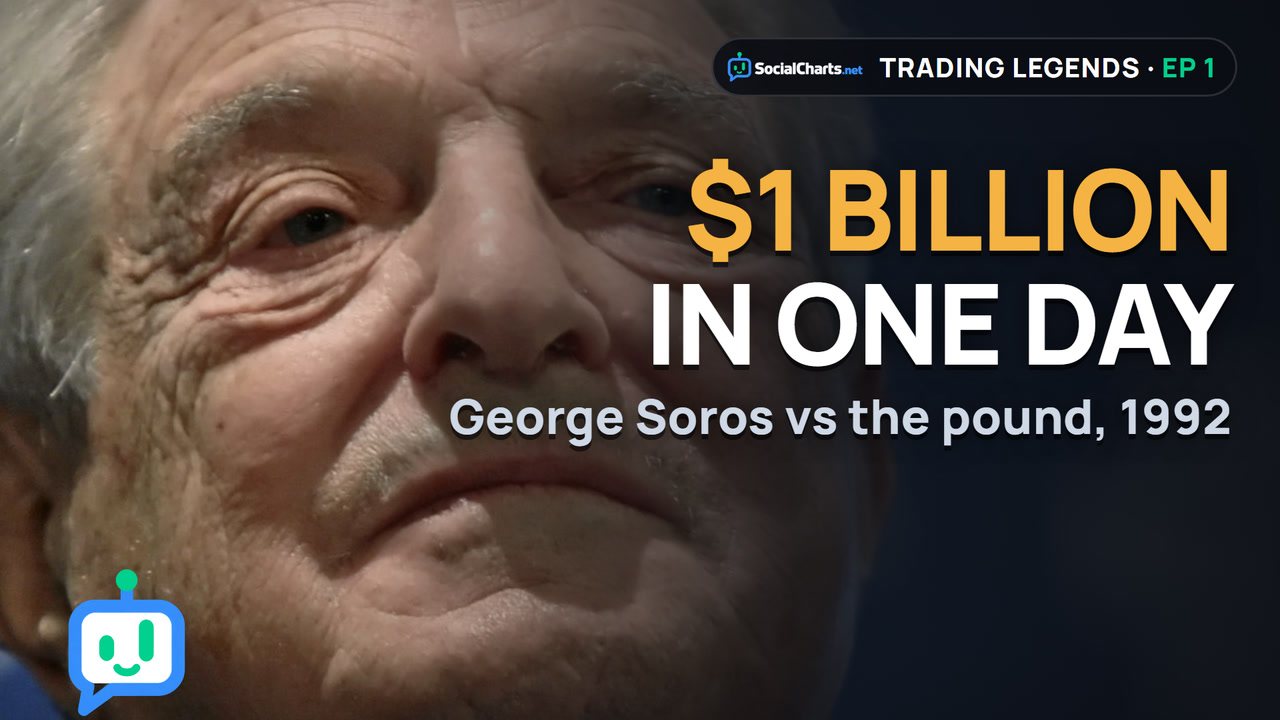
Wednesday, 16 September 1992, London. By the evening, the British government had spent billions defending its currency, and lost. At about half past seven, the Chancellor, Norman Lamont, walked out of the Treasury and said: “Today has been an extremely difficult and turbulent day.”
In two days, the pound lost more than 6% against the German mark. In New York, one fund made about a billion dollars. Its founder became known as the man who broke the Bank of England: George Soros.
Who is George Soros
George Soros was born in Budapest in 1930. As a teenager, he survived the Nazi occupation of Hungary by living under a false identity. After the war he moved to London and worked his way through the London School of Economics. In 1956 he left for New York.
In the early 1970s he went out on his own. By 1992 his main fund was called the Quantum Fund, one of the most successful funds in the world. Its lead portfolio manager was Stanley Druckenmiller. The big idea of 1992 started with him.
The trap: the ERM
In October 1990, Britain joined the European Exchange Rate Mechanism (ERM). The idea was stability. The pound would stay close to 2.95 German marks and never fall below 2.778. If it got close to that floor, the Bank of England had to defend it.
But Germany had just reunified. To fight inflation, the German central bank, the Bundesbank, kept interest rates high, and money flowed to the mark. Britain needed the opposite. Its economy was weak after a recession. High rates hurt, but leaving the ERM would look like failure.
On 1 June 1992, the pound was at 2.9357 marks, close to the central rate. By 25 August it was at 2.7923, below 2.80 and pressed against the floor.
The bet
Druckenmiller saw the trap. He believed Britain could not keep rates high forever, so the pound would have to fall. He saw the trade as lopsided:
| If they were… | The pound | For Quantum |
|---|---|---|
| Wrong | back toward DM 2.95, about 6% | an expected limited loss |
| Right | no floor at all | a potential large gain |
They expected that, if they were wrong, the pound would climb back toward the middle of the band. From the floor to the central rate is about 6%. If they were right, there was no floor at all. When Druckenmiller brought the idea to Soros, Soros told him to go much bigger. Quantum’s bet against the pound was reported at about $10 billion.
They were not alone. Banks, funds and companies across the world were selling pounds too.
Black Wednesday
On the morning of 16 September, the Bank of England bought pounds, billions of them. It was not enough.
| 16 Sep 1992 (London) | What happened |
|---|---|
| 11:00 | Interest rates raised from 10% to 12%. The pound did not move. |
| 14:15 | A move to 15% announced. The selling did not stop. |
| 19:30 | Just after 19:30, the pound left the ERM and the move to 15% was called off. |
| Next morning | Rates went back to 10%. |
The pound closed that day at 2.7784 marks, just above the floor. The next day it fell to 2.6323. By 30 September it was at 2.5095.
After the storm
On 24 February 1993, about five months later, the pound reached 2.3213 marks. That was 16.5% below its close on 16 September, the day it left the ERM.
| Date | DM per £ | vs 16 Sep 1992 |
|---|---|---|
| 1 Jun 1992 | 2.9357 | +5.7% |
| 16 Sep 1992 | 2.7784 | – |
| 17 Sep 1992 | 2.6323 | −5.3% |
| 30 Sep 1992 | 2.5095 | −9.7% |
| 24 Feb 1993 | 2.3213 | −16.5% |
Bank of England daily spot rates (4 pm London), series XUDLDMS.
Quantum’s profit on the pound was reported at about $1 billion. For Britain, the cost was later put at about £3.3 billion, according to Treasury papers released in 2005.
The pound fell against the US dollar too. On 2 September 1992 it closed at 2.0036 dollars, its highest close of 1992. On 16 September it closed at 1.8467, and on 11 February 1993 at 1.4182, about 23% below its 16 September close.
But the story has a twist. Free from the ERM, Britain cut interest rates, and its economy recovered. Some even called the day White Wednesday.
What traders can learn
- A price held in place is not a safe price. Someone is paying to hold it, and that can stop.
- Quantum saw the trade as lopsided. It expected a small move against it or a much larger move in its favor.
- Position size reflected the expected risk. Soros bet big because he saw the possible loss as limited and clear.
A floor that someone defends can hold for a long time, and then break in one day. The pound sat just above 2.778 for about three weeks before 16 September.
Big positions and borrowed money go together in many trades. If you are new to them, read Leverage and Margin and How to Size a Position.
Frequently asked questions
Who broke the Bank of England?
George Soros is called the man who broke the Bank of England. His Quantum Fund, run day to day by Stanley Druckenmiller, bet heavily against the pound in 1992. Many banks, funds and companies were selling pounds too.
How much did Soros make on Black Wednesday?
Quantum’s profit on the pound was reported at about $1 billion, on a position reported at about $10 billion.
What was the ERM?
The European Exchange Rate Mechanism. Britain joined in October 1990 and promised to keep the pound near 2.95 German marks and never below 2.778.
What happened on Black Wednesday?
On 16 September 1992 the Bank of England bought billions of pounds, raised rates from 10% to 12% and announced 15%. Just after 19:30 the pound left the ERM and the move to 15% was called off.
Why do some call it White Wednesday?
Free from the ERM, Britain could cut interest rates, and its economy recovered.
See the pound today
Open GBPUSD on the daily chart and find the biggest one-day moves of the past year.
Keep learning
 Chart School · 3How to Identify a Trend: Swing Highs, Swing Lows and When Trends End
 Gold Playbook · 2What Happens to Gold on Jobs Day? 5 Real NFP Releases, Minute by Minute
 Trading Terms · 2Long vs Short: Buying and Selling Explained
Educational content only, not investment advice. Trading CFDs and forex involves a high risk of losing money.